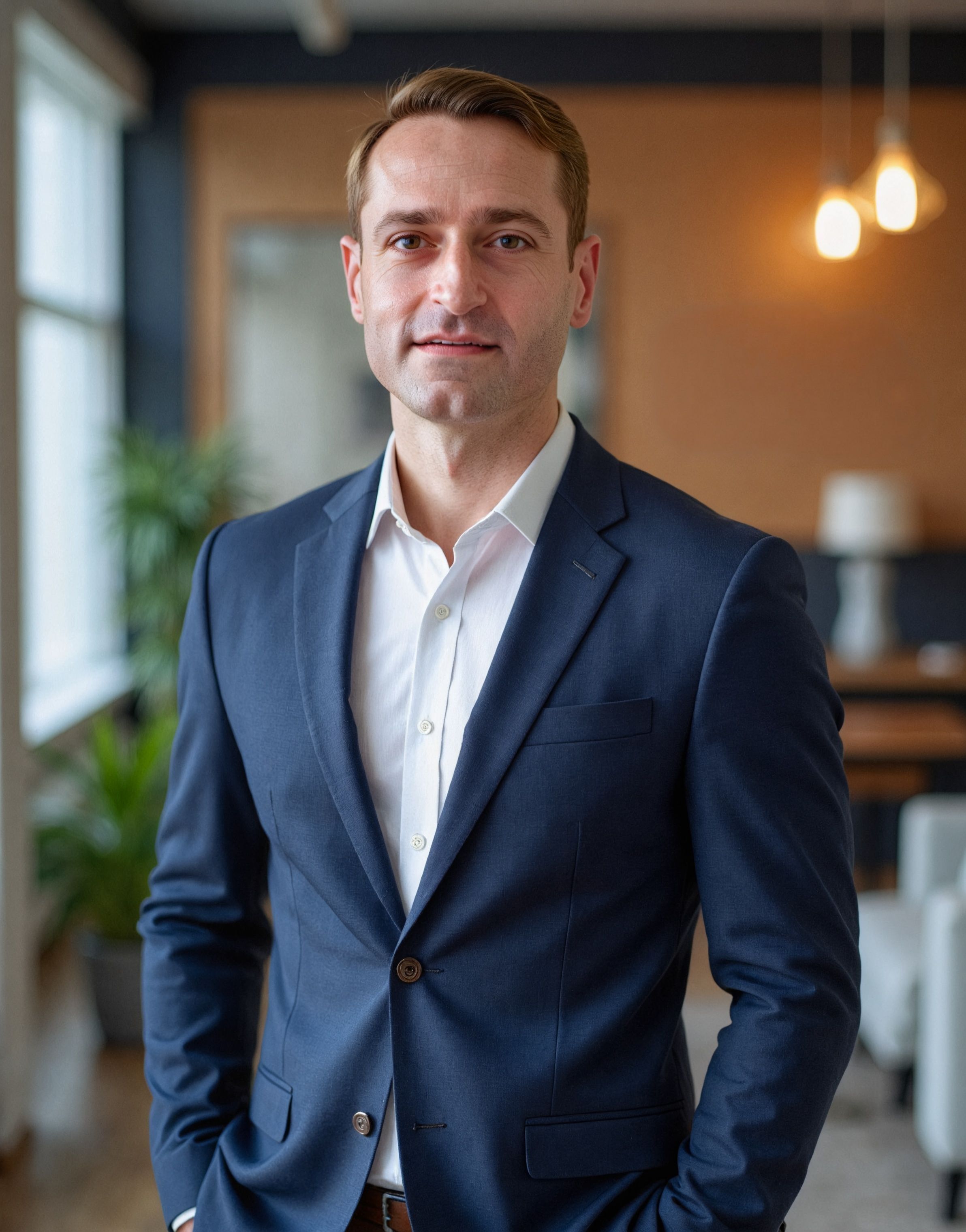
Portrait of Kyle C. Smith, R&D executive and technical founder

R&D Executive · Technical Founder · Cambridge, MA

Kyle C. Smith, PhD

Technical depth, strategic judgment.

Medtech · Diagnostics · Microfluidics

Highlights

Experience

2021 — Present

BendBio

Chief Technology Officer & Co-Founder

Ultra-high-throughput microfluidics · Cell therapy manufacturing

  • Architected the pivot from a capital-intensive instrument model to a partnership-funded disposables model.
  • Established revenue-generating partnerships with OEM and biopharma companies.
  • Invented foundational microfluidic filtration IP using custom Python design algorithms.
  • Ran a lean R&D operation at a fraction of typical hardware-startup overhead.

2015 — 2020

MicroMedicine

Senior Director, R&D · First employee & founding team

MGH spinout · Cell processing for research, diagnostics, and therapeutics

  • Led the spin-out from MGH and built the R&D foundation for product commercialization.
  • Directed R&D execution that secured $38M in milestone-based funding and culminated in the commercial launch of the Class I Sorterra cell processing platform.
  • Built the 12-person R&D organization from scratch; opened a fully partner-funded cell-therapy program with a global pharma leader.

2011 — 2015

Massachusetts General Hospital

Principal Scientist · Senior Research Scientist

BioMEMS Resource Center · Microfluidic cell sorting · Cancer diagnostics

  • Invented high-performance magnetic cell sorting for circulating tumor cell isolation, anchoring the $35M CTC-iChip partnership with J&J.
  • Developed foundational IP for ultra-high-throughput microfluidic cell sorting; technology became the basis for multiple spinout companies.
  • Pioneered algorithmic CAD tools for rapid device-variant screening and led tech transfer to scalable injection-molding manufacturing.

2024 — Present

Leva Scientific

Principal & Founder

Independent advisory practice

  • Advise medtech ventures and institutional investors on R&D strategy, technical due diligence, and platform de-risking.

levasci.com →

Approach

Most deep-tech ventures don't lack good ideas. They lack the surrounding structure to let those ideas mature on the timeline the technology actually requires: capital, organization, partners, sequencing. The judgment calls I find most consequential are the ones that match the venture's structure to the work the technology demands.

In practice, that means small teams of high-trust operators, lines of accountability that survive contact with the lab, and active honesty about what's working and what isn't. The best technical leadership I've seen, and what I try to provide, combines deep conviction about where the work is heading with total openness about how to get there. I'm most useful where that judgment shapes the work itself, and where the system around it has the patience to let it compound.

Education

Massachusetts Institute of Technology

PhD, Biomedical & Electrical Engineering — Harvard-MIT Health Sciences & Technology

SM, Electrical Engineering & Computer Science

NSF Graduate Research Fellow · Whitaker Foundation Graduate Research Fellow

Duke University

BSE with Distinction, Biomedical Engineering

Pratt Engineering Undergraduate Research Fellow · Helmholtz Award

Connect

Open to senior R&D leadership and operating-partner roles in deep-tech ventures — medtech, diagnostics, life sciences.

Also open to conversations with founders, boards, and investors thinking through challenging technical questions in their ventures.